Eating Rhythm
Whole Grains Across a Working Week
Margaret Pembroke
·
·
8 min read
·
London
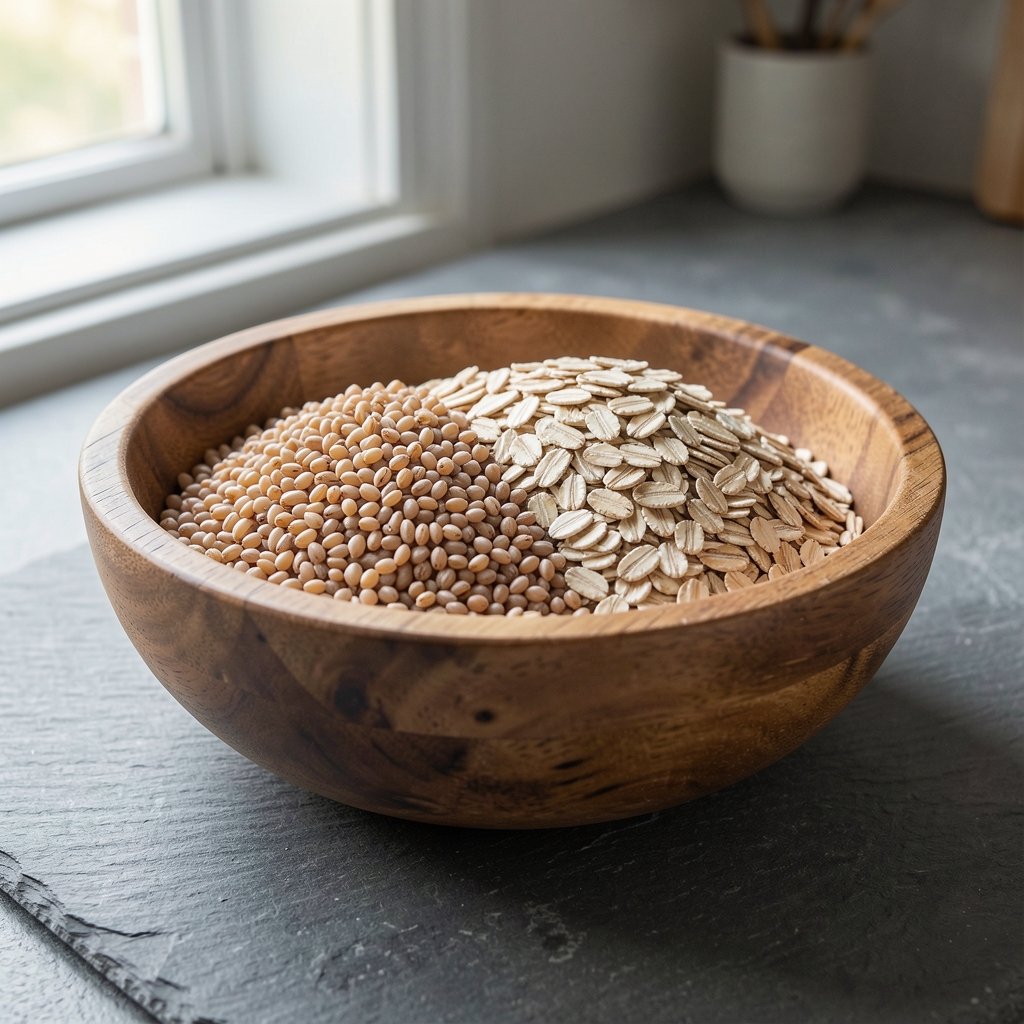
Whole Grains — Eating Rhythm — London, March 2026
I kept a detailed food record across one week in early March — seven consecutive days, no modifications to my schedule or routine, only a deliberate change to the grain component of each day's meals. The premise was simple: I wanted to understand what a week built consistently around whole grains would feel like, compared to a week of ordinary habits. What I found was more interesting than I expected.
Whole grains have a particular quality in food writing: they are recommended often, understood vaguely, and used irregularly. Most people who eat them do so inconsistently — barley appears on a Tuesday, oats on a Thursday morning, and the rest of the week reverts to white rice, pasta, and bread. The effect of a single grain inclusion is genuinely different from the effect of consistent grain inclusion across a structured week, and this distinction is almost never discussed in the food writing I have encountered.
What follows is the daily log, lightly edited. I have kept the documentary format that I use in my private food records — dates, observations, and a brief note on the appetite pattern that followed each meal. The grains used across the week were: rolled oats, pearl barley, farro, spelt, and brown rice. Each was prepared simply — cooked in water or stock, served as the base of a larger plate.
Appetite observation: Hunger returned at approximately 12:45 — nearly three hours after eating. The morning had a quality of undistracted attention that I noted specifically, partly because Monday mornings are typically not my most settled working hours.
Tuesday's significant grain inclusion was at lunch: pearl barley as the base of a bowl with roasted courgette, a poached egg, and a small quantity of soft herbs. Pearl barley has a pleasingly substantial texture when cooked — it resists the fork slightly, which again influences eating pace in a way I find useful to note. The meal took longer to eat than a comparable rice-based bowl would have.
Appetite observation: The late-afternoon window arrived noticeably later than my baseline average — closer to five o'clock than to four. I attributed this partly to the barley and partly to the egg, acknowledging that single-variable observation is impossible in everyday food records.
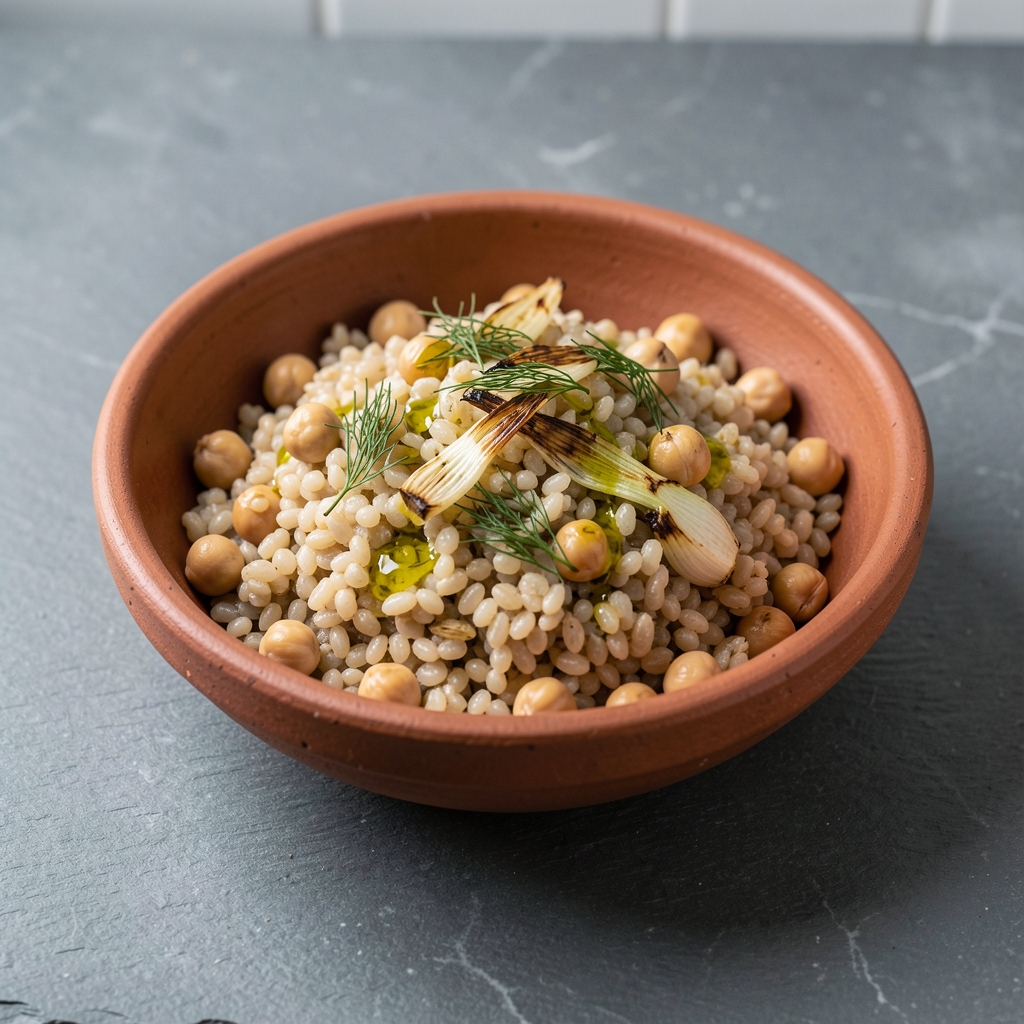
Wednesday is often the most pressured day of my working week, and I had anticipated that the deliberate grain inclusion would be harder to maintain. In the event, I had prepared farro the previous evening — cooked in a light vegetable stock with dried thyme — and it served as the base for both a morning addition to eggs and a lunchtime bowl with roasted fennel and chickpeas.
Appetite observation: Wednesday produced my most consistent fullness pattern of the week to that point. I noted it specifically as a contrast to a typical Wednesday, which tends to produce disruptive hunger by mid-afternoon. The combination of farro and chickpeas at lunch — two slow-digesting foods — may account for the difference.
Thursday introduced a note of complexity. I had intended to use whole spelt cooked as a grain, but instead ate two slices of whole spelt sourdough bread — a processed form of the same grain. The distinction between whole, intact grains and grains that have been milled into flour and then baked is nutritionally significant, and I wanted to see if it produced a perceptible difference in my records.
Appetite observation: Thursday was less consistent than Wednesday. Hunger returned earlier, and the late-afternoon window arrived at approximately its baseline timing. I noted this without drawing a firm conclusion — one day is not a pattern — but it is consistent with the nutritional literature's suggestion that intact whole grains are associated with a more gradual hunger return than their milled equivalents.
The working week ended with brown rice as the lunchtime anchor — a larger portion than I would normally prepare, served with roasted carrots, a soft-boiled egg, and a modest quantity of sesame seeds. Brown rice is perhaps the most familiar of the whole grains in everyday cooking, and it performed reliably in my records throughout the week whenever I used it.
Appetite observation: Friday's late-afternoon window was the latest of the week — arriving just before five-thirty. Whether this reflects a cumulative effect of a week of whole grains, the specific composition of Friday's plate, or a natural variation in appetite at the end of a working week is impossible to determine from a single record. It is, nonetheless, a note worth keeping.
"The effect of a single grain inclusion is genuinely different from the effect of consistent grain inclusion across a structured week — and this distinction is almost never discussed."
Margaret Pembroke — March 2026
The week produced several observations worth carrying forward. The first, and perhaps the most practically useful, concerns preparation. Every day on which the whole grain inclusion was consistent was a day when I had either cooked the grain the previous evening or used a grain that cooked quickly (oats, in particular). The Thursday exception — when I substituted bread for an intact grain — arose partly from not having prepared anything in advance. The rhythm of the week depends, in some measure, on the rhythm of the preceding evening.
The second observation concerns consistency over variety. It is tempting, in thinking about whole grains, to focus on choosing the right grain — the most nutritionally complex, the least processed, the most fashionable. This week suggested that the more important variable is simply whether a whole grain is present at all, and whether it is present across the whole week rather than on occasional days. The differences between oats, barley, farro, and brown rice, in the context of these observations, were smaller than the difference between the grain-inclusive days and the grain-light day.
One observation that emerged from the week that I had not specifically anticipated concerned eating pace. The denser, more textured grains — pearl barley and farro particularly — required more chewing and produced a naturally slower eating pace than, say, a bowl of well-cooked oats or a plate of soft brown rice. Slow eating allows natural fullness signals to register, and this is a dimension of whole grain inclusion that I think deserves more attention.
The relationship between eating pace and food and hunger awareness is a thread that runs through much of the recent nutritional literature on mindful eating. The mechanism, broadly, is that it takes time for the body's appetite signals to communicate the onset of fullness — and if a meal is consumed quickly, those signals arrive after the meal is already complete. A grain that requires more chewing, simply by virtue of its texture, is a meal that is more likely to be eaten at a pace that allows those signals to arrive during the meal rather than after it.
This is not an argument for eating uncomfortably or performing mindfulness at the table. It is an observation that grain texture is a variable with appetite-related consequences, and that choosing a grain partly on the basis of its chewiness is a reasonable editorial note to add to a food record.

This is a seven-day field note from one writer's kitchen. It does not claim to generalise. The consistent theme across this week, and across the broader field notes that Tarole Field Notes publishes, is that the architecture of the daily plate has consequences for the architecture of the working day — and that these consequences are observable, personal, and worth recording. The nutritional literature on whole grains and sustained fullness is well-established and worth reading as a companion to personal observation.
Articles published on Tarole Field Notes are editorial in nature and reflect the writers' observations on everyday food choices, satiety patterns, and appetite rhythm. The content is not intended as professional advice, nor as guidance for the management of any specific condition. Readers with specific concerns about their daily routines are encouraged to speak with a qualified wellness professional.